







Will Writing
Clear, professional will-writing guidance for individuals, couples and families across Poole, Bournemouth, Christchurch and wider Dorset.
Whether you are making your first will, reviewing an existing will or dealing with changes in your family or property, Brooks Wills provides plain-English guidance and a clear process.
A will should reflect your life as it is now
A will records how you would like your estate to be dealt with after your death. It can also identify the people responsible for carrying out your wishes, known as executors.
Your circumstances may be straightforward, or they may involve property, adult children, grandchildren, a second marriage or a blended family. The important thing is that your will reflects your wishes clearly and is prepared with your real circumstances in mind.
A properly considered will can make things clearer for your family and reduce uncertainty at a difficult time.
When should you consider making or reviewing your will?
You do not currently have a will
Your existing will is several years old
You have married, divorced or entered a new relationship
You have bought, sold or changed how you own property
You have children, stepchildren or grandchildren
You want to reconsider your executors or beneficiaries
You are approaching or have recently entered retirement
Your financial or family circumstances have changed
The right approach depends on your individual circumstances.
Brooks Wills can help you understand the options and decide what needs attention.
Will-writing support tailored to your circumstances
Every family and every situation is different. Whether you’re making your first will, updating an existing one or planning for more complex family circumstances, Brooks Wills provides clear, professional guidance tailored to your needs.
New wills
For individuals and couples who do not yet have a valid will in place.
Will reviews and updates
Reviewing an existing will after changes to your family, property or wishes.
Wills for couples
Helping couples consider how they would like their estates to be dealt with.
Mirror wills
Mirror wills may suit some couples, depending on their circumstances and intentions.
Property considerations
Considering how property ownership may interact with the wishes recorded in your will.
Blended families
Planning where there are children, stepchildren, a second marriage or a new relationship.
Choosing executors
Helping you think carefully about who should be responsible for carrying out your wishes.
Gifts and personal wishes
Recording gifts, personal possessions and other wishes clearly within your will.
How the Process Works
We aim to make the process as straightforward and stress-free as possible.
1
2
3
4
5
6
1
Initial Consultation
We take the time to understand your family, property, wishes and any existing will or arrangements already in place.
2
Advice & Suggestions
We explain the available options in plain English, helping you understand what may be appropriate for your circumstances and answering any questions you may have.
3
Document Preparation
Your will is prepared carefully, ensuring your wishes, beneficiaries and chosen executors are recorded clearly and accurately.
4
Review & Amendments
We review your draft will together and make any changes needed before it is finalised.
5
Signing & Witnessing
We guide you through the correct signing and witnessing requirements so your will is completed properly.
6
Ongoing Support
Life changes. We are here to help you review and update your will whenever your circumstances or wishes change.
Still have a question?
We’re here to help. Get in touch for friendly, plain-English advice.
Why Choose Us?
Local & Trusted
Based in Poole and covering all of Dorset and West Hampshire, we offer a friendly and professional service you can rely on.
Tailored to You
Every will is customised to your own personal circumstances and priorities.
Simple Process
We guide you through every step of the way, avoiding using confusing legal jargon where we can, and explaining it thoroughly when we can't.
Peace of Mind
Know that your wishes are documented clearly and legally, protecting your loved ones.
Related Services

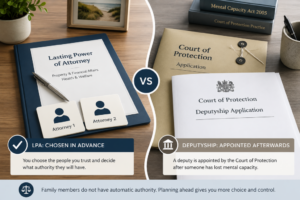
Lasting Powers of Attorney
Helping you appoint trusted people to make decisions if you are no longer able to do so yourself.

Advance Decision to Refuse Treatment
Also known as a living will, this records specific medical treatment you would not want if you could not make or communicate decisions in the future.

Deputyship Application
Helping families apply to the Court of Protection when a loved one has lost mental capacity and no Lasting Power of Attorney is in place.

Related Guides
Find plain-English guidance on wills, Lasting Powers of Attorney and later-life planning, written for individuals and families across Poole, Bournemouth, Christchurch and wider Dorset.

The Complete Guide to Making a Will in England and Wales
A comprehensive plain-English guide to making a will in England and Wales, covering executors, beneficiaries, guardians, property, trusts and valid signing.

Property and Financial Affairs LPA Explained
Learn how a Property and Financial Affairs LPA works, what decisions attorneys may make and the safeguards that protect the donor in England and Wales.

Advance Decisions Explained: Refusing Treatment in Advance
Learn how an Advance Decision to Refuse Treatment works, what it can cover and the special rules that apply to life-sustaining treatment.

Planning for Later-Life Care Costs
Planning for later-life care costs means understanding possible care needs, funding routes, financial assessments and the importance of keeping control of your arrangements.

What Is Estate Planning? A Plain-English Guide
What is estate planning? Learn how wills, LPAs, property ownership, nominations and later-life arrangements can work together in England and Wales.

Health and Welfare LPA Explained
Learn how a Health and Welfare LPA works, when attorneys can act and what decisions they may make about care, treatment and personal welfare.
Frequently Asked Questions
Answers to some of the questions we are commonly asked.
What happens if I die without a will?
If you die without a valid will in England and Wales, your estate is distributed under the intestacy rules. Those rules decide who may inherit your money, property and possessions, rather than allowing you to choose. This can be particularly important for unmarried partners, stepchildren and more complex family arrangements, because they may not inherit automatically.
A will gives you the opportunity to record who should benefit and who should deal with your estate.
How often should I review my will?
There is no single review period that suits everyone, but it is sensible to review your will regularly and whenever your circumstances change.
Important triggers include:
- Marriage, divorce or separation
- A new partner or second marriage
- The birth of children or grandchildren
- Buying or selling property
- A significant change in finances
- The death or incapacity of an executor or beneficiary
- A change in your wishes
A signed will should not simply be edited by hand. Changes generally require a properly executed codicil or a new will.
Are mirror wills suitable for every couple?
No. Mirror wills can suit some couples whose wishes are broadly alike, but they are not automatically right for everyone.
More careful planning may be needed where there are:
- Children from previous relationships
- A second marriage
- Different wishes about beneficiaries
- Property ownership considerations
- Concerns about what may happen after the first person dies
The right arrangement depends on the couple’s circumstances and intentions.
Can I choose more than one executor?
Yes. You can appoint more than one executor to deal with your estate and carry out the instructions in your will.
When choosing executors, consider whether they are trustworthy, organised and likely to work well together. It can also be helpful to name replacement executors in case one of your original choices cannot act.
Your will should identify who is responsible for sorting out your estate and carrying out your wishes.
Does marriage or divorce affect a will?
It can.
Marriage may affect the validity of an existing will, so anyone marrying or entering a civil partnership should review their arrangements. Divorce or the dissolution of a civil partnership does not necessarily cancel the whole will, but provisions involving the former spouse or civil partner can be affected and may no longer operate as originally intended.
It is sensible to review your will promptly following marriage, separation or divorce.
Can my will deal with property and personal possessions?
Yes. A will can set out what should happen to your money, property and possessions after your death. It can also name beneficiaries, appoint executors and record what should happen if a chosen beneficiary dies before you.
How property passes can also depend on how it is legally owned, particularly where a home is owned jointly. That should be checked when preparing or reviewing the will.
These answers provide general information for England and Wales. Individual circumstances differ, so Brooks Wills can help you review your position and explain the next step clearly.
Ready to get your will organised?
Whether you are making your first will or reviewing an existing one, Brooks Wills can help you understand the options and take the next step with confidence.