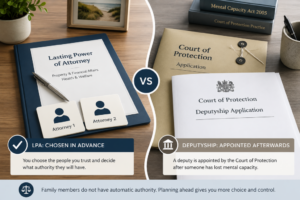








Lasting Powers of Attorney
Clear, professional guidance on Lasting Powers of Attorney for individuals and families across Poole, Bournemouth, Christchurch and wider Dorset.
An LPA allows you to appoint people you trust to help make decisions or act on your behalf if support is needed in the future.
Planning ahead helps you retain choice
A Lasting Power of Attorney allows you to choose who should help make decisions for you if you are unable to manage certain matters yourself.
The person making the LPA is called the donor. The people appointed are called attorneys. Here, “attorney” means someone appointed under an LPA, not a lawyer.
An LPA must be made while the donor has mental capacity. It must also be registered with the Office of the Public Guardian before an attorney can use it.
Putting arrangements in place in advance can make your wishes clearer and help trusted people understand what authority they have.
When should you consider making or reviewing an LPA?
You do not currently have an LPA
You want trusted people to help manage financial matters if needed
You want to record who should make health or care decisions
You are approaching or have recently entered retirement
You live alone or rely on someone for practical support
Your chosen attorneys or family circumstances have changed
You have an older LPA that may need reviewing
You want to organise your will and LPAs together
The right arrangements depend on your circumstances, relationships and wishes. Brooks Wills can explain the options and help make the process more manageable.
Lasting Power of Attorney support tailored to your circumstances
There is more to an LPA than completing a form. The choices you make about attorneys, replacements, instructions and preferences should reflect your real circumstances.
Property and Financial Affairs LPAs
These can cover decisions involving money and property, such as bills, bank accounts, pensions and property matters.
Health and Welfare LPAs
These can cover decisions about health, care, medical treatment and where you live.
Both types of LPA
Many people consider both types because they cover different areas of decision-making.
Choosing attorneys
Helping you consider who is trustworthy, practical and willing to take on the responsibility.
Appointing more than one attorney
Explain the choices for appointing attorneys jointly, jointly and severally, or in different ways for different decisions.
Replacement attorneys
Choose replacement attorneys who may step in if an original attorney can no longer act.
Preferences and instructions
Record preferences and, where appropriate, instructions that help your attorneys understand how you would like decisions approached.
Reviewing existing arrangements
Review an existing LPA after changes to your attorneys, circumstances or wishes.
How the Process Works
We aim to make the process as straightforward and stress-free as possible.
1
2
3
4
5
6
1
Initial Consultation
We take time to understand your circumstances, discuss your wishes and help you consider who you would like to appoint as your attorneys.
2
Advice & Suggestions
We explain the two types of Lasting Power of Attorney, how they work and the decisions involved, so you can make informed choices with confidence.
3
Document Preparation
We prepare your Lasting Powers of Attorney carefully, ensuring your attorneys, replacement attorneys, preferences and instructions are recorded accurately.
4
Review & Amendments
We review the documents together, answer any questions and make any changes before they are signed.
5
Signing & Registration
We guide you through the correct signing process and explain the next steps for registering your LPAs with the Office of the Public Guardian.
6
Ongoing Support
If your circumstances change, we can help you review your LPAs and discuss whether any updates may be appropriate.
Still have a question?
We’re here to help. Get in touch for friendly, plain-English advice.
Why people choose Brooks Wills
Local, Personal Support
Based in Poole and supporting families across Poole, Bournemouth, Christchurch and wider Dorset. You'll deal directly with Brooks Wills, with clear guidance from start to finish.
Planning Around Your Circumstances
Every family is different. Whether you're making your first will, reviewing an existing one or planning for a more complex situation, your documents should reflect your wishes and circumstances.
Clear, Plain-English Guidance
We explain your options without unnecessary jargon, helping you understand the choices available so you can make informed decisions with confidence.
Confidence for the Future
Knowing your wishes have been properly recorded can make future decisions clearer for the people you care about most.
Related Services

Will Writing
Drafting your Last Will and Testament and overseeing its execution.

Advance Decision to Refuse Treatment
Also known as a living will, this records specific medical treatment you would not want if you could not make or communicate decisions in the future.

Deputyship Application
Helping families apply to the Court of Protection when a loved one has lost mental capacity and no Lasting Power of Attorney is in place.

Related Guides
Find plain-English guidance on wills, Lasting Powers of Attorney and later-life planning, written for individuals and families across Poole, Bournemouth, Christchurch and wider Dorset.

The Complete Guide to Making a Will in England and Wales
A comprehensive plain-English guide to making a will in England and Wales, covering executors, beneficiaries, guardians, property, trusts and valid signing.

Property and Financial Affairs LPA Explained
Learn how a Property and Financial Affairs LPA works, what decisions attorneys may make and the safeguards that protect the donor in England and Wales.

Advance Decisions Explained: Refusing Treatment in Advance
Learn how an Advance Decision to Refuse Treatment works, what it can cover and the special rules that apply to life-sustaining treatment.

Planning for Later-Life Care Costs
Planning for later-life care costs means understanding possible care needs, funding routes, financial assessments and the importance of keeping control of your arrangements.

What Is Estate Planning? A Plain-English Guide
What is estate planning? Learn how wills, LPAs, property ownership, nominations and later-life arrangements can work together in England and Wales.

Health and Welfare LPA Explained
Learn how a Health and Welfare LPA works, when attorneys can act and what decisions they may make about care, treatment and personal welfare.
Frequently Asked Questions
Answers to some of the questions we are commonly asked.
What is a Lasting Power of Attorney (LPA)?
A Lasting Power of Attorney (LPA) is a legal document that allows you to appoint one or more trusted people to make decisions on your behalf if you are unable to do so yourself, or if you need help managing certain matters. In England and Wales there are two separate types of LPA: one for Property and Financial Affairs and one for Health and Welfare.
What is the difference between the two types of LPA?
A Property and Financial Affairs LPA allows your attorneys to help with matters such as bank accounts, paying bills, pensions and property.
A Health and Welfare LPA allows your attorneys to make decisions about care, medical treatment and living arrangements if you are unable to make those decisions yourself.
Many people choose to put both types in place as they cover different aspects of future decision-making.
When should I make a Lasting Power of Attorney?
The best time is while you still have mental capacity and can make your own decisions.
Many people choose to arrange LPAs when they retire, after receiving a medical diagnosis, or simply as part of getting their affairs organised. Planning ahead means you decide who you trust to act for you, rather than leaving decisions until a crisis arises.
Who should I choose as my attorney?
Your attorney should be someone you trust to act in your best interests. This could be a spouse, partner, adult child, close family member or trusted friend.
You can appoint more than one attorney and you can also nominate replacement attorneys in case your original choice is unable or unwilling to act in the future.
What happens if I lose mental capacity without an LPA?
If you lose mental capacity without an LPA, your family cannot automatically manage your finances or make important decisions on your behalf.
Depending on the circumstances, someone may need to apply to the Court of Protection to become a deputy. This process can take time and involves ongoing responsibilities. Making an LPA in advance allows you to choose who you would like to act for you.
Does my Lasting Power of Attorney need to be registered?
Yes. An LPA must be registered with the Office of the Public Guardian before it can be used.
Although you can prepare the documents at any time while you have mental capacity, they cannot normally be used until registration has been completed. Registering the LPA in advance can help avoid delays if it is needed unexpectedly.
Ready to put your plans in place?
A Lasting Power of Attorney gives you the opportunity to choose who you trust to make important decisions if you ever need support in the future.
Brooks Wills provides clear, professional guidance to help you understand your options, appoint suitable attorneys and complete the process with confidence.