







Deputyship & Court of Protection

Helping families understand what happens when it is too late to make a Lasting Power of Attorney.

If someone has already lost mental capacity and does not have a valid Lasting Power of Attorney, decisions about their finances or welfare may require an application to the Court of Protection.

Brooks Wills provides clear guidance to help families understand the deputyship process and what the next steps may involve.

Outdoor dinner gathering with friends.
Family walking together on path.
Brooks Wills - Mother and Daughter Holding Hands
Family enjoying a playful forest walk

When important decisions can no longer wait

If someone has already lost mental capacity and does not have a Lasting Power of Attorney in place, family members can find themselves unsure how to manage finances, deal with banks or make important decisions. In these circumstances, it may be necessary to apply to the Court of Protection for a deputyship order.

Is deputyship the right next step?

A loved one has lost mental capacity.
No Lasting Power of Attorney is in place.
Bills or bank accounts need managing.
Property needs to be sold.
Care arrangements are changing.
Benefits or pensions need managing.
Financial decisions cannot wait.
You are unsure what to do next.

If someone close to you has already lost mental capacity and no Lasting Power of Attorney is in place, deputyship may provide the legal authority needed to manage important decisions on their behalf. Brooks Wills can help you understand the process and what happens next.

Deputyship guidance tailored to your circumstances

Every family and every situation is different. Whether you’re making your first will, updating an existing one or planning for more complex family circumstances, Brooks Wills provides clear, professional guidance tailored to your needs.


Understanding Deputyship

For individuals and couples who do not yet have a valid will in place.

Property & Financial Affairs

Reviewing an existing will after changes to your family, property or wishes.

Personal Welfare

Helping couples consider how they would like their estates to be dealt with.

Court Applications

Mirror wills may suit some couples, depending on their circumstances and intentions.

Responsibilities of a Deputy

Considering how property ownership may interact with the wishes recorded in your will.

Managing Property & Finances

Planning where there are children, stepchildren, a second marriage or a new relationship.

Family Guidance

Helping you think carefully about who should be responsible for carrying out your wishes.

Planning for the Future

Recording gifts, personal possessions and other wishes clearly within your will.

How the Process Works

We aim to make the process as straightforward and stress-free as possible.

1

2

3

4

5

6

1

Initial Consultation

We take the time to understand your situation, discuss your loved one’s circumstances and explain when deputyship may be required.

2

Advice & Suggestions

We explain the deputyship process in plain English, helping you understand the role of the Court of Protection, the options available and what to expect.

3

Document Preparation

We help prepare the information and documentation needed to support a deputyship application, ensuring everything is completed as accurately and clearly as possible.

4

Review & Amendments

Before the application is submitted, we review everything with you, answer any questions and make sure you understand the next stages of the process.

5

Signing & Witnessing

We guide you through what happens after submission, including the Court of Protection process, what to expect while your application is being considered and the responsibilities that come with becoming a deputy.

6

Ongoing Support

Deputyship brings continuing responsibilities. We’re here to provide guidance if your circumstances change or you need support understanding your ongoing role.

Still have a question?

We’re here to help. Get in touch for friendly, plain-English advice.

Why Families Choose Brooks Wills

Local & Trusted

Supporting individuals and families across Poole, Bournemouth, Christchurch and wider Dorset with clear, professional guidance when deputyship may be needed.

Tailored to You

Every family's circumstances are different. We take the time to understand your situation, explain the options available and help you navigate the deputyship process with confidence.

Simple Process

Deputyship can feel overwhelming. We explain each stage in plain English, helping you understand what to expect and what happens next.

Peace of Mind

When someone has lost mental capacity, knowing where to turn can make all the difference. Brooks Wills provides calm, practical guidance to help you move forward with confidence.

Related Services

Person signing document with pen.

Lasting Powers of Attorney

Helping you appoint trusted people to make decisions if you are no longer able to do so yourself.

Medical equipment in a hospital setting

Advance Decision to Refuse Treatment

Also known as a living will, this records specific medical treatment you would not want if you could not make or communicate decisions in the future.

Person organising documents in folder

Deputyship Application

Helping families apply to the Court of Protection when a loved one has lost mental capacity and no Lasting Power of Attorney is in place.

Related Guides

Find plain-English guidance on wills, Lasting Powers of Attorney and later-life planning, written for individuals and families across Poole, Bournemouth, Christchurch and wider Dorset.

Frequently Asked Questions

Answers to some of the questions we are commonly asked.

What is deputyship?

Deputyship is a legal process that allows the Court of Protection to appoint someone to make certain decisions on behalf of a person who has lost mental capacity and can no longer make those decisions themselves.

A deputy is only appointed when there is no valid Lasting Power of Attorney in place or where another legal authority does not exist.

The Court of Protection is a specialist court in England and Wales that makes decisions about the property, finances and, in some circumstances, the personal welfare of people who lack mental capacity.

It can appoint a deputy where ongoing decisions need to be made on someone’s behalf.

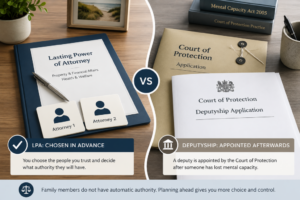
An attorney is chosen by an individual while they still have mental capacity through a Lasting Power of Attorney.

A deputy is appointed later by the Court of Protection after a person has already lost mental capacity.

Planning ahead with an LPA allows you to choose who will act for you, whereas deputyship is a court process where that decision is made after capacity has been lost.

Not necessarily.

Even a spouse, partner or adult child does not automatically have legal authority to manage another person’s finances or make wider decisions simply because they are a close relative.

Where no appropriate legal authority exists, it may be necessary to apply to the Court of Protection for deputyship.

The timescale varies depending on the circumstances and the Court of Protection’s workload.

Deputyship applications generally take longer than arranging a Lasting Power of Attorney because they involve a formal court process.

If urgent decisions are needed, it is important to seek guidance as early as possible.

Yes.

Brooks Wills provides clear, professional guidance to help you understand when deputyship may be appropriate, explain how the Court of Protection process works and support you through the next steps.

Businessman extending hand for handshake

Unsure what to do next?

Losing a loved one’s ability to make decisions can be overwhelming. Brooks Wills can help you understand the deputyship process, explain your options in plain English and guide you through the next steps.